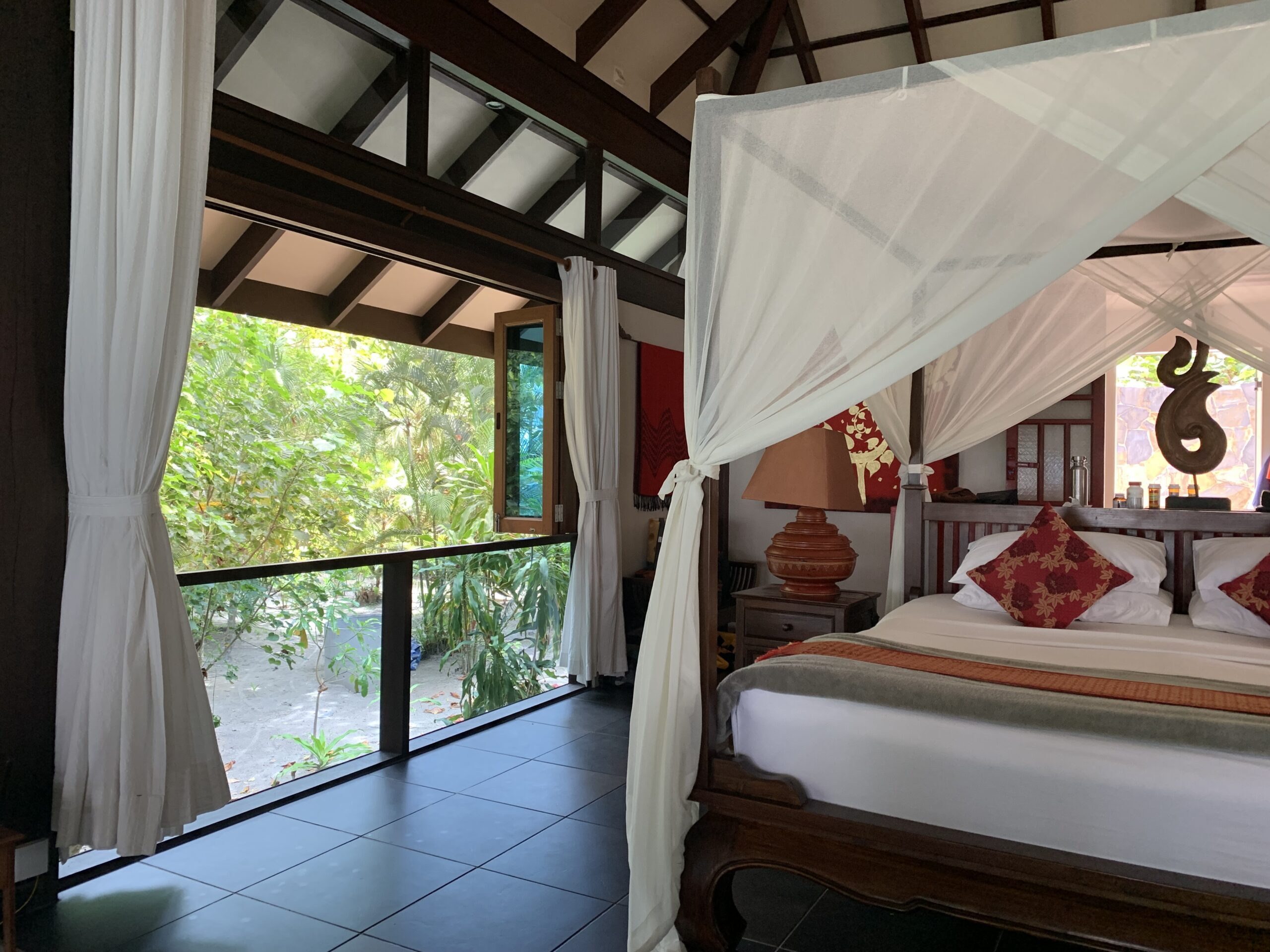
We are currently on Koh Jum, a small island off Krabi in southern Thailand. We took a car from the Krabi airport to a fishermen’s pier outside the city, then a longtail boat over to the island. It was about an hour from the airport to the pier and about 40 minutes to cross the water. Our first two weeks we rented a beachfront cottage at Koh Jum Beach Villas. What a great place to stay! We had a lovely villa—private pool, kitchen, main room, dining area, outdoor shower…


We also had nice people around and chatted with the staff at the restaurant each afternoon. I loved walking along the shoreline where the bubble crabs scurried back and forth making their sand pellets and digging their holes. There were hermit crabs, too. An interesting side note: the hermit crab population grew so large in 2020 during COVID lockdowns the poor little guys ran out of shells to live in. Really. Check it out: Guardian article.
We took a tuk tuk tour and learned all about the island. Koh Jum is about 19 square kilometers in total with one road and three small villages—Ban Koh Pu, Ban Ting Rai and Ban Koh Jum (ban or baan means home or village). The first two villages are comprised of a few roadside family shops, outlying rubber tree fields and several houses. The third and largest, Ban Koh Jum, includes a looping road that takes you by fishermen’s cottages built partly over the water on stilts in the traditional Thai style of canal or river houses. Longboats are moored below. Along the road are endless stacks of fishing traps and nets. There is also a small Chinatown with a few general stores and a tailor shop. Heading back down the main road, there is a school, hospital, a few family-run restaurants, the P&P mini market (one of our regular stops) and even one lone ATM housed in a step-in pillar baking in the sun next to the primary school. In addition to the villages, small resorts and rubber tree fields, there is still a lot of jungle and undeveloped areas on the island, too.


One of the wonderful things about staying on Koh Jum is that the local fishermen bring in fresh seafood each day. At the beach villas, the seafood chest at the restaurant was filled each day at 5 o’clock. Magically, you open the long icebox cooler and there is fresh snapper, grouper (if you could actually eat it all), squid, prawns and river prawns… We had calamari several nights and it was the best I’ve ever eaten.


We also toured the organic gardens. The restaurant using a lot of this locally grown produce in its dishes.


We are now on the northern end of the island at Piman Pu. I will have a make a separate post on our stay here. We decided on a week. For now, I will leave you with two facts: the monsoons have rolled in and, as Richard pointed out, we have bright red umbrellas and a fighting bull on a rope just over the hedge. Hmmm.
Mid-month we plan to fly north to tour the ancient capital cities of the Thai Kingdom–Ayutthaya and Sukhothai, with a stay on the Khwai River in between. More temples and ruins, which I’m excited to see. We’ll no doubt battle a few monkeys, and we’ll definitely enjoy some street food at the local night markets.
Next up: More of Koh Jum
Leave a Reply